G-06 Auckland location guide · review pending
Can I build a granny flat in Pukekohe?
Check Pukekohe aquifer, precinct, servicing and urban-edge planning layers for the address before making a granny-flat decision.
Possibly—but the locality alone cannot determine eligibility. The proposed building and the actual address must pass separate building and planning checks.
Indicative locality result
Gate 1
Building Act
Design check requiredThe Building Act exemption depends on the proposed building and the people responsible for the work.
Gate 2
Planning rules
Address check requiredThe NES-DMRU pathway, zone, overlays, precincts and other rules must be checked for the legal site.
Passing one gateway does not prove the other. This locality guide is information, not council approval.
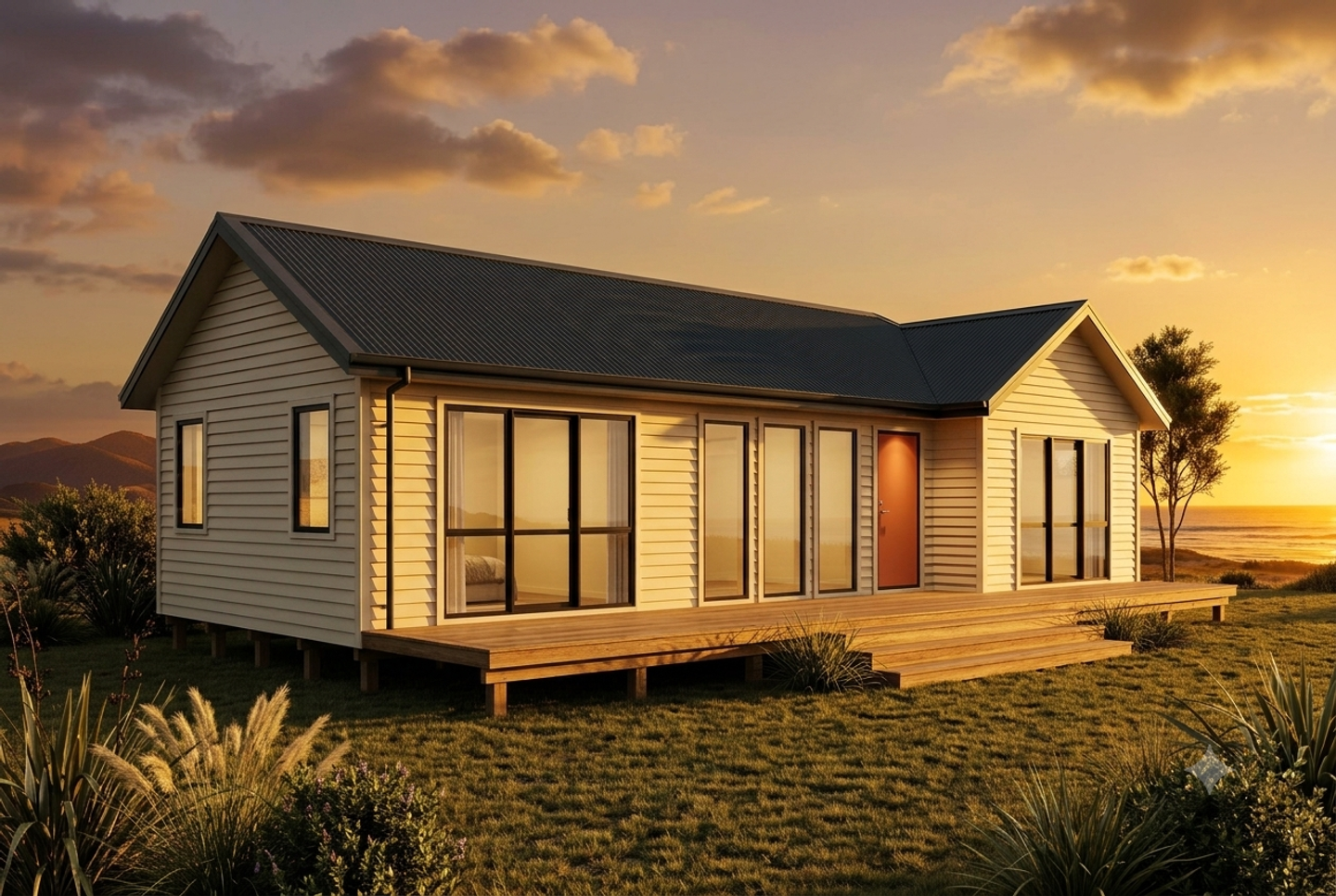
Representative granny-flat design
Representative design only. Locality and address-level constraints determine whether and where a project may work.
Source: Ready to Build review image
What Pukekohe can—and cannot—tell you
The Unitary Plan identifies the Pukekohe Kaawa and Pukekohe volcanic aquifers and contains named Pukekohe precincts. Those mapped systems are useful context, but aquifer naming does not prove that ordinary residential work will take groundwater or need a particular consent.
Pukekohe sites can also differ across urban, growth and rural-edge settings, so zone, precinct, stormwater and network checks need to start with the legal site.
Local checks to make
Start with these Pukekohe checks
- 01/
Aquifer mapping
Check whether groundwater provisions are relevant to the proposed work rather than inferring a consent requirement from the locality name.
- 02/
Zone and precinct
Identify the current zone, any precinct and operative or proposed growth-area provisions for the address.
- 03/
Stormwater and services
Confirm site drainage, flood information, wastewater, water, access and provider capacity.
Why the address changes the answer
An urban serviced lot and a rural-edge property can both use Pukekohe in their address while presenting very different planning, network and site-design questions.